The Loaded Carry Protocol: Build Tactical Strength That Transfers to the Street
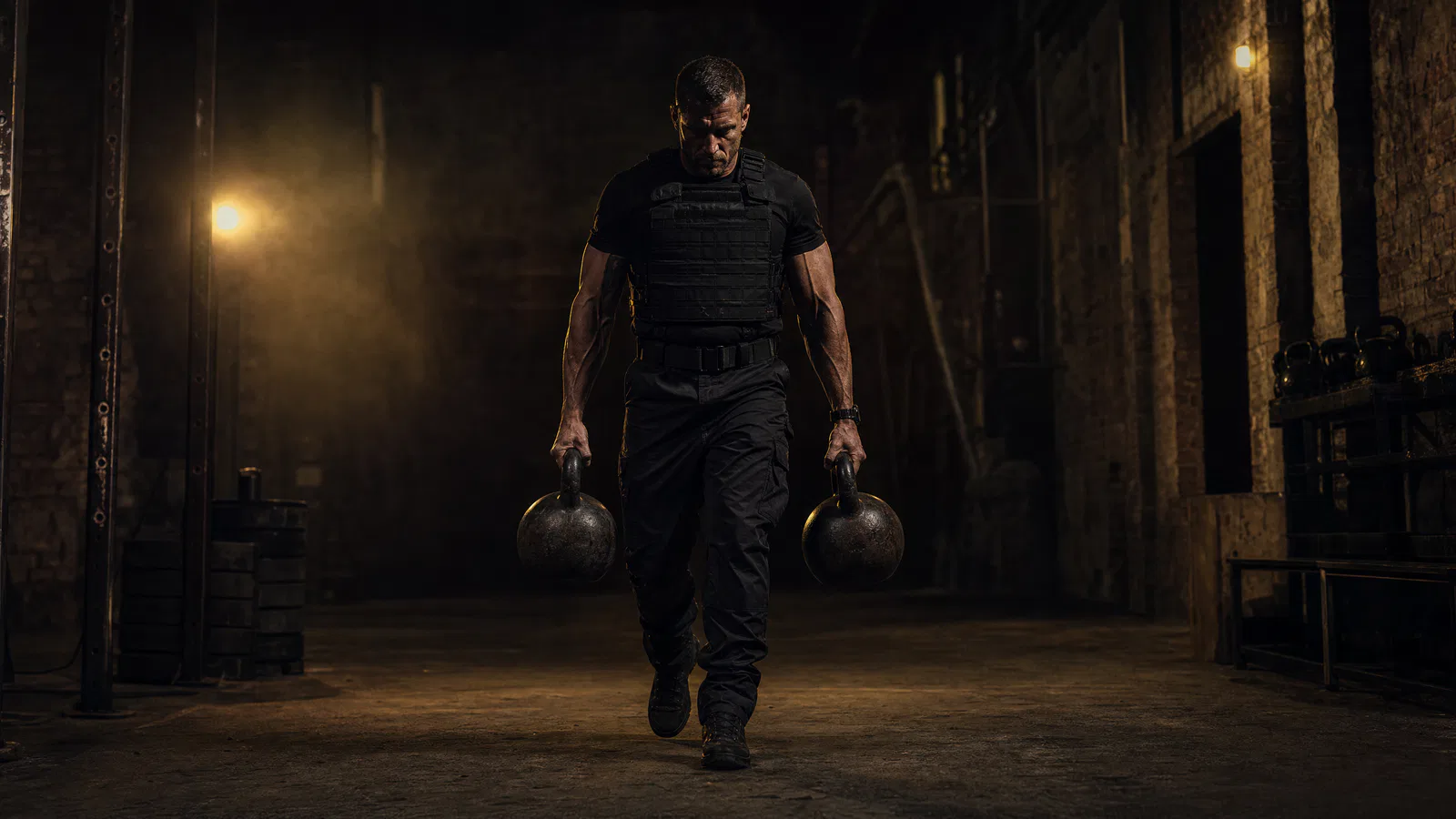
The most specific job you have as a first responder is moving heavy, awkward loads under stress. Whether you are dragging a suspect, carrying gear up three flights of stairs, or hauling a patient out of a tight space, the demand is the same. You need total body strength, an unbreakable grip, and a core that will not collapse under pressure.
Yet, most cops and firefighters spend their gym time on isolated movements. They bench press. They curl. They do crunches. None of these exercises prepare the body for the reality of the street or the fireground.
If you want to build strength that actually translates to your job, there is one movement pattern you must master: the loaded carry.
The Reality of the Job
The statistics on first responder injuries are staggering. Research shows that 60 percent of all law enforcement officers experience low back pain during their careers. Musculoskeletal disorders account for over 25 percent of all physical disability in police personnel, with back disorders making up nearly half of that number. For firefighters, the risk is even higher. They are 3.5 times more likely to suffer a workplace injury than a private-sector worker, and police officers and career firefighters have the highest injury rates across occupations.
The duty belt, body armor, and turnout gear take a massive toll on the body. Carrying 20 to 50 extra pounds of gear every shift changes your center of gravity. It forces your lower back to work overtime just to keep you upright. When you add the sudden, explosive movements required in an emergency, it is no wonder that backs give out and careers end early.
This is where the loaded carry comes in. It is not just an exercise. It is a survival tool.
The Desk is Just as Dangerous
Patrol officers are not the only ones breaking down. Detectives, analysts, supervisors, and anyone assigned to a desk are getting the same damage in a different chair. You sit for eight to ten hours reviewing case files, writing reports, and staring at a monitor. Your hip flexors shorten. Your glutes shut off. Your shoulders round forward and your upper back locks up.
The difference is that desk workers do not get the occasional burst of movement that patrol provides. They sit. All day. Then they go home and sit some more. When they finally need to lift something heavy or respond physically, their body is completely unprepared for the demand.
Loaded carries fix this problem regardless of your assignment. Whether you spend your shift in a cruiser or a cubicle, the protocol builds the structural integrity your body needs to handle sudden physical demands after hours of being sedentary.
Why Loaded Carries Work
A loaded carry is exactly what it sounds like: you pick up a heavy weight and you walk with it. It could be farmer's walks with heavy dumbbells, a suitcase carry with a kettlebell in one hand, or a sandbag carry across your chest.
When you walk with heavy weight, your entire body must work as a single unit. Your grip locks in. Your shoulders pull back. Your core braces to protect your spine. Your hips and legs drive the movement. This co-contraction of muscles is exactly what happens when you have to move a person or heavy equipment on the job. If your back already hurts from the gear, start with the cruiser trap fixes.
Dynamic Core Stability
Most core training is done on the floor. Planks and crunches have their place, but they do not teach your body how to stabilize while moving. The loaded carry forces your core to brace against shear and compressive forces while your legs are in motion. This is called dynamic core stability. According to spine biomechanics experts, this type of training is essential for protecting the lower back and pelvis. When you brace your core during a heavy carry, you are building the exact armor your spine needs to survive a 12-hour shift in full gear.
Grip Strength as a Predictor of Performance
Grip strength is more than just hand strength. It is a direct indicator of overall body strength and muscular endurance. Research shows that male law enforcement officers average a grip strength of about 109 pounds, while female officers average about 71 pounds. Hitting higher numbers on grip strength tests directly correlates with better performance on physical qualification exams.
Furthermore, grip strength is critical for weapon retention and shooting accuracy. If your grip fails during a struggle, you lose. Loaded carries build a vice-like grip that will not quit when you need it most.
Postural Correction
Sitting in a cruiser, an engine, or at a desk for hours destroys your posture. Your shoulders round forward, your chest gets tight, and your upper back weakens. Heavy farmer's walks force you into perfect posture. To carry the weight effectively, you must pull your shoulders back and down, open your chest, and stand tall. This counteracts the damage done by seated patrol, desk work, and heavy vests.
Preparing for Tactical Unit Standards
Here is something most people do not think about until it is too late. Many tactical units, SWAT teams, and specialized assignments incorporate some form of loaded carry into their physical fitness tests and selection standards. They test your ability to move heavy equipment over distance under time pressure. They want to know if you can carry a downed officer out of a hot zone. They want to see if your body can handle the sustained physical output their mission demands. This is what it means to train as a tactical athlete.
If you are preparing for a tactical unit selection, a promotional fitness assessment, or any specialized assignment that tests physical readiness, this protocol will put you ahead of the competition. The people who fail these tests are not weak in the gym. They are weak under load and under movement. Loaded carries train exactly what those evaluators are looking for.
Do not wait until you get the test date to start preparing. Build this capacity now so that when the opportunity comes, you are already ready.
The 4-Week Loaded Carry Protocol
To build real tactical strength, you need a structured plan. You cannot just pick up weights randomly and expect results. The following 4-week protocol is designed to build grip strength, core stability, and total body endurance. It requires minimal equipment: heavy dumbbells, kettlebells, or a sandbag.
Incorporate this protocol into your existing training routine twice a week. Do not perform these on consecutive days. Between sessions, use these five recovery protocols.
Week 1: Building the Base
Session A: Heavy Farmer's Walks The Setup: Grab a heavy dumbbell or kettlebell in each hand. The weight should be challenging but allow for perfect posture. The Execution: Walk 20 yards out and 20 yards back. Keep your chest up and your core tight. The Volume: 4 sets. Rest 90 seconds between sets.
Session B: The Suitcase Carry The Setup: Hold a heavy weight in only one hand. This forces your opposite side core to work aggressively to keep you standing straight. The Execution: Walk 20 yards with the weight in your right hand. Switch hands and walk 20 yards back. The Volume: 4 sets per side. Rest 60 seconds between sets.
Week 2: Increasing Time Under Tension
Session A: Max Distance Farmer's Walks The Setup: Use a slightly lighter weight than Week 1. The Execution: Walk as far as possible until your grip starts to fail. Note the distance or time. The Volume: 3 sets. Rest 2 minutes between sets. Try to beat your distance on each set.
Session B: Sandbag Bear Hug Carry The Setup: Pick up a heavy sandbag (or a heavy medicine ball) and hug it tight to your chest. The Execution: Walk 30 yards out and 30 yards back. This heavily taxes the upper back and core, simulating carrying a person or gear. The Volume: 4 sets. Rest 90 seconds between sets.
Week 3: Adding Complexity
Session A: The Stop-and-Go Carry The Setup: Heavy farmer's walk setup. The Execution: Walk 10 yards, stop completely, stand tall for 3 seconds, then walk another 10 yards. Repeat for a total of 40 yards. The Volume: 4 sets. Rest 90 seconds between sets. The dead stops force your core to re-stabilize repeatedly.
Session B: Uneven Carries The Setup: Hold a heavy weight in one hand and a lighter weight in the other. The Execution: Walk 20 yards out. Switch the weights to the opposite hands and walk 20 yards back. The Volume: 4 sets. Rest 60 seconds between sets. This builds extreme lateral core strength.
Week 4: The Tactical Test
Session A: The 100-Yard Heavy Haul The Setup: Choose a heavy weight that you can confidently carry for 20 yards. The Execution: Your goal is to cover 100 yards total. You can set the weight down to rest, but the clock keeps running. The Volume: 2 sets of 100 yards. Rest 3 minutes between sets.
Session B: The Medley The Setup: Set up a farmer's walk, a suitcase carry, and a sandbag carry. The Execution: Perform 20 yards of farmer's walks, immediately drop the weight and do 20 yards of a suitcase carry (right arm), switch to the left arm for 20 yards, and finish with a 20-yard sandbag carry. The Volume: 3 rounds. Rest 2 minutes between rounds.
The Standard
Your job does not care if you are tired. It does not care if your back hurts. When the call comes, you have to perform.
Stop training like a bodybuilder and start training like a tactical athlete. The loaded carry is the most direct path to building the functional, durable strength required for the realities of public safety. Pick up heavy things. Walk with them. Build the armor your body needs to survive the shift and dominate the job.
Go Deeper: Recharge and Recover
The job will take everything you give it. If you work nights, rotating shifts or mandatory overtime, recovery is not optional. It is part of your readiness. Recharge and Recover is my short, practical guide to taking your recovery back on your terms.
Get Recharge and Recover on Kindle
Antonio M. Scott is the founder of Optimum Valor, a performance optimization system built for law enforcement officers, firefighters, EMS professionals, and public safety leaders.
Support the Mission
Optimum Valor provides these performance protocols, leadership frameworks, and training systems for free because the professionals who protect and serve deserve access to elite resources.
If this content has helped you improve your recovery, your leadership, or your performance on the street, consider supporting the platform. Your contribution directly funds the creation of more tools and resources for first responders.
STAY ON MISSION
Get the free End-of-Shift Recovery Checklist
Join the list and I'll send you a 2-page checklist to come down from the shift and walk in the door present.