The Tactical Athlete: Why First Responders Must Train Like Elite Athletes
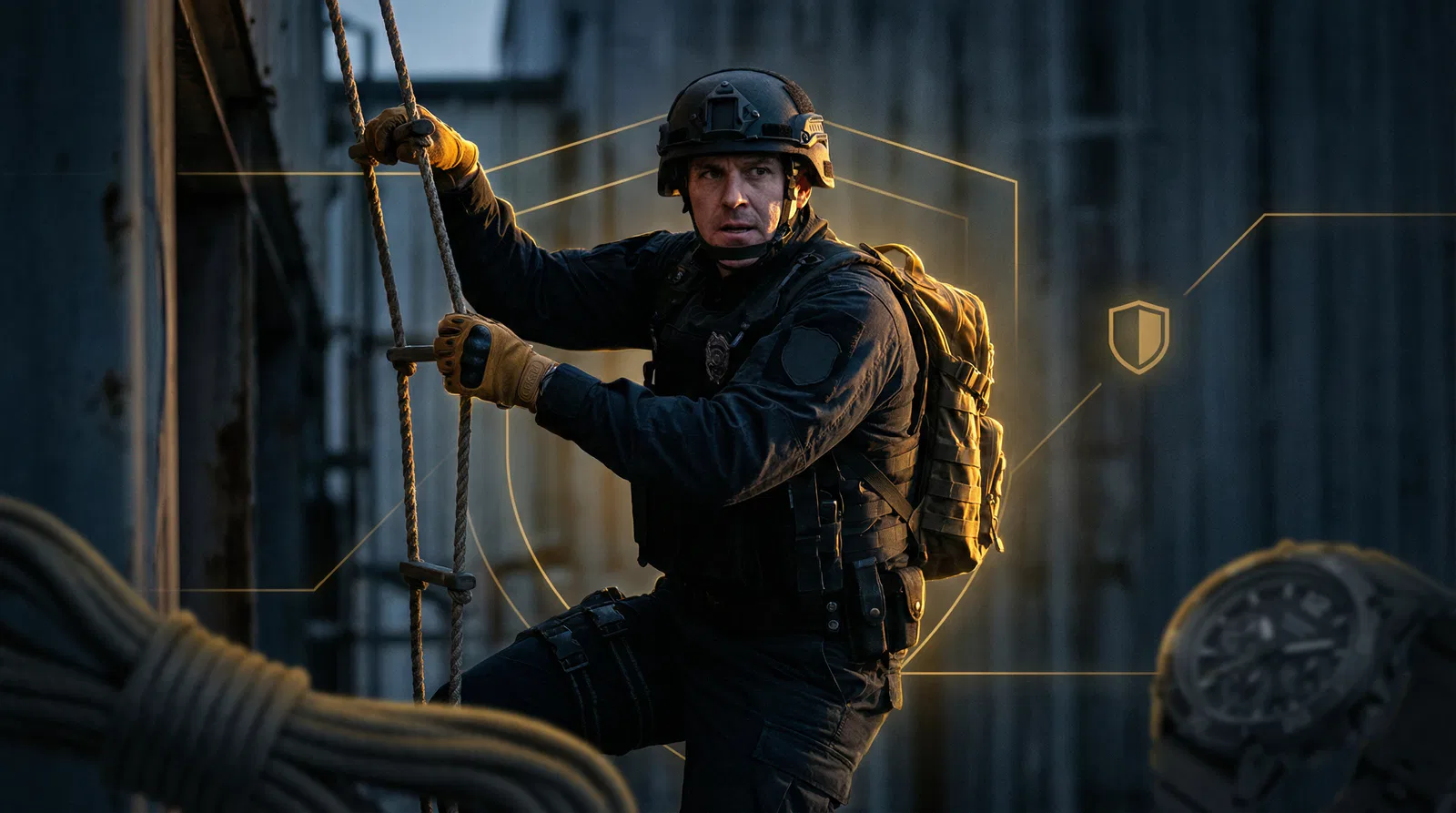
Your Body Is Your Primary Weapon System
You've never seen a sprinter pull a hamstring halfway through the 100-meter final at the Olympics. You've never watched a powerlifter throw out their back on a competition deadlift. Why? Because they've spent years meticulously preparing their bodies for a single, predictable event. They know the day, the hour, and the exact demands of their performance. Their training is a science of peaking at the perfect moment.
Now think about your last shift. Did you know you'd be sprinting down a hallway in full gear? Did you schedule that wrestling match with a combative subject? Did you pencil in carrying a 200-pound victim out of a smoke-filled building? Of course not. You're a tactical athlete, and the whistle can blow at any second of any shift, for a game you've never rehearsed. The demand is always now, and the stakes are infinitely higher than a gold medal.
This is the fundamental truth that separates us from every other athlete on the planet. And if you're still training like you're trying to get beach-ready for summer, you're not just failing yourself — you're failing your partners, your family, and the people who call 911 expecting a professional who can handle their emergency.
Let's be blunt: the gym bros hitting bicep curls and calf raises have it easy. Their goal is aesthetics. Your goal is lethality and survivability. The American College of Sports Medicine (ACSM) officially recognized this distinction in their 2020 report, "Optimizing Health, Wellness, and Performance of the Tactical Athlete." They confirmed what those of us on the street have known for years: first responders, military personnel, and other public safety professionals are a unique athletic population with unparalleled physical demands.
Think about the sheer diversity of what the job asks of your body. One minute you're sedentary, writing a report in your vehicle. The next, you're in a full-blown anaerobic sprint, heart rate pegged at max, with your life or someone else's on the line. You need the explosive power of a linebacker, the endurance of a distance runner, and the resilience to do it all again twelve hours later on four hours of broken sleep.
Musculoskeletal injuries are rampant in our professions for a reason — we're asking our bodies to do what no other athlete would dare: perform at peak capacity, on-demand, without a warm-up, without a game plan, and without the luxury of sitting out the next play.
Training for the Unpredictable
So what does a proper tactical training program look like? It's not about how much you can bench press. It's about building a body that is resilient, functional, and ready for anything. The National Strength and Conditioning Association (NSCA) takes this so seriously they created a specific certification — the Tactical Strength and Conditioning Facilitator (TSAC-F) — to address this exact need. A simple start is the 4-week loaded carry protocol.
A smart tactical program is built on a few key principles:
Functional, Multi-Joint Movements. Your body works as a system. Your training should reflect that. Think less about isolating muscles and more about movements that mimic the job: lifting, carrying, pushing, pulling, and dragging. Deadlifts, squats, farmer's walks, and sled pushes are your new best friends. That leg extension machine? Leave it for the bodybuilders.
Integrated Cardiovascular Training. You need to be able to go from zero to redline and stay there. This means a mix of high-intensity interval training (HIIT) to build your anaerobic threshold and longer, steady-state sessions to develop your aerobic base. Your heart is a muscle — train it for the demands of the job, not for a number on a treadmill display. Build the engine with the Zone 2 aerobic base protocol.
A Relentless Focus on Recovery and Injury Prevention. The most important ability is availability. You can't help anyone if you're on light duty with a blown-out knee. This means prioritizing sleep, nutrition, and mobility work with the same discipline you bring to your strength training. It means listening to your body and knowing when to push and when to back off. Then cover recovery with five protocols for tactical athletes.
Periodization for the Tactical World. Traditional athletes periodize their training to peak for a specific competition date. We can't do that. Our periodization has to be more fluid — built around blocks of training that maintain a high level of readiness year-round, while strategically planning for deload weeks and recovery periods wherever we can fit them. The goal isn't to peak once; it's to never dip below a baseline of operational readiness.
The Bottom Line
This isn't about spending three hours in the gym every day. It's about training smarter, not harder. It's about recognizing that your fitness is not a hobby — it's a professional obligation. It's the foundation upon which every other skill you have is built. Your marksmanship, your defensive tactics, your ability to make sound decisions under pressure — all of it degrades when your body isn't up to the task.
Being a tactical athlete isn't a choice; it's a requirement of the job. The moment you put on the uniform, you accepted the responsibility of being physically and mentally prepared for the worst-case scenario. The people we serve don't care if you just worked a double or if you're sore from yesterday's workout. They expect you to be at your best, every single time.
Take an honest look at your current training. Is it preparing you for the realities of the street, or is it just a habit you picked up in high school? Are you building a resilient machine, or are you just going through the motions?
Go Deeper: Recharge and Recover
The job will take everything you give it. If you work nights, rotating shifts or mandatory overtime, recovery is not optional. It is part of your readiness. Recharge and Recover is my short, practical guide to taking your recovery back on your terms.
Get Recharge and Recover on Kindle
Antonio M. Scott is the founder of Optimum Valor, a performance optimization system built for law enforcement officers, firefighters, EMS professionals, and public safety leaders.
Support the Mission
Optimum Valor provides these performance protocols, leadership frameworks, and training systems for free because the professionals who protect and serve deserve access to elite resources.
If this content has helped you improve your recovery, your leadership, or your performance on the street, consider supporting the platform. Your contribution directly funds the creation of more tools and resources for first responders.
STAY ON MISSION
Get the free End-of-Shift Recovery Checklist
Join the list and I'll send you a 2-page checklist to come down from the shift and walk in the door present.