Wearable Tech for Police: Can Data Prevent Officer Burnout?
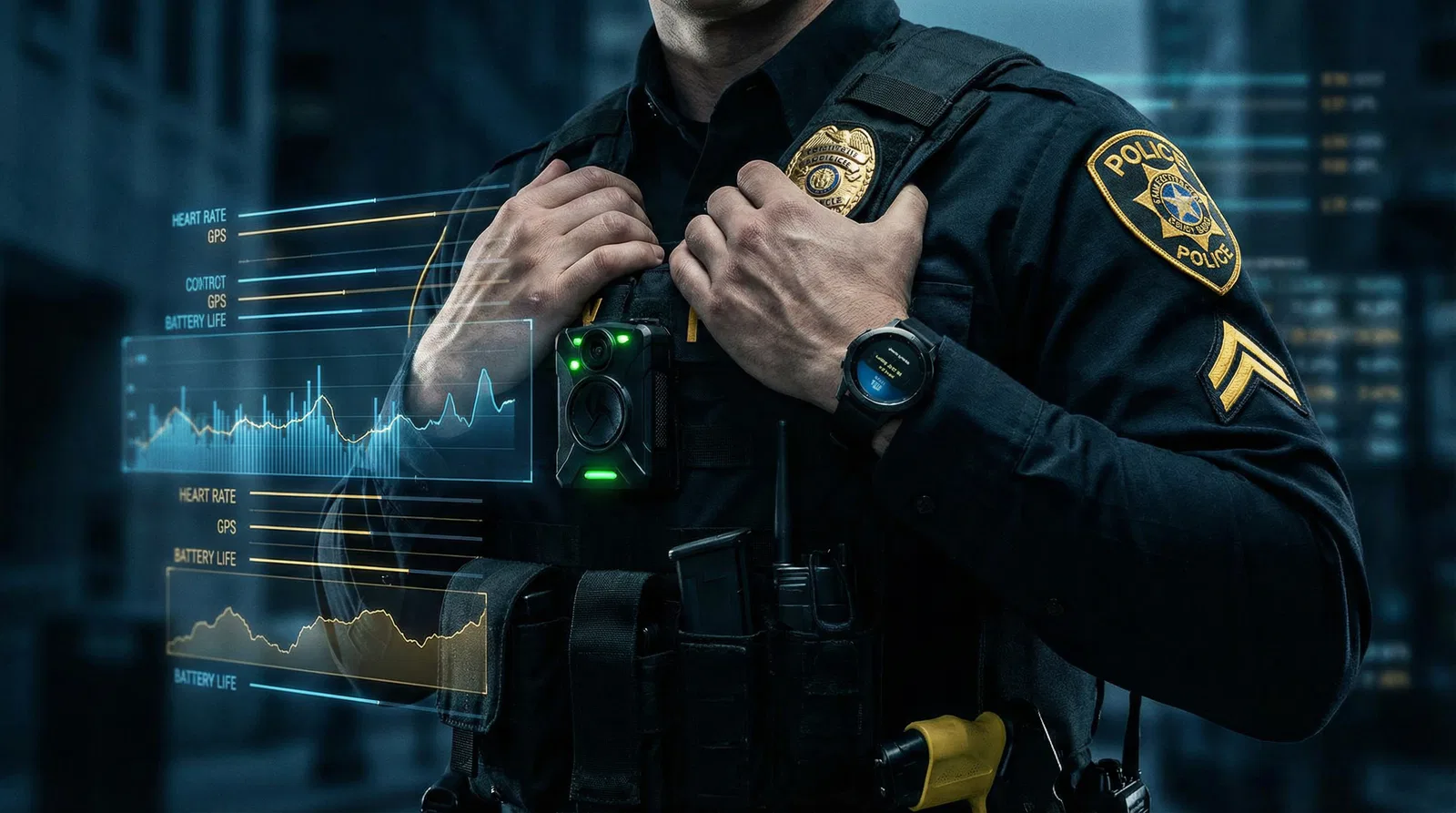
The Black-and-White of Wearable Tech
Another shift done. You're back in the locker room, the weight of the vest finally off your shoulders. You're physically exhausted, but your mind is still racing, replaying calls, second-guessing decisions, and anticipating the next tour. We've all been there. We run on caffeine and adrenaline, telling ourselves the fatigue is just part of the job. But what if we could get ahead of the burnout? What if the data to predict and prevent it was sitting right on our wrist?
For years, the only tech we wore was a radio and a sidearm. Now, you see cops sporting Garmins, WHOOPs, and Oura Rings. It's not just about tracking your 10-8 time or how many steps you took clearing a building. This new generation of wearable technology is giving us a look under the hood, providing real-time data on the physiological toll of the job.
We're talking about metrics that matter: Heart Rate Variability (HRV), sleep quality, resting heart rate, and even daily "stress scores." This isn't some Silicon Valley fad; it's a set of tools that can give us an edge in a profession that takes every ounce of our physical and mental energy. Think of it as your own personal dashboard, an early warning system for when your internal engine is running too hot. For a deeper look at the metric, read HRV and Stress.
Beyond Step Counting: What the Data Really Means
It's easy to dismiss wearables as glorified pedometers, but the science is catching up to the street.
Heart Rate Variability (HRV) is one of the most powerful metrics for any first responder. It measures the variation in time between each heartbeat, giving you a direct window into your autonomic nervous system. A higher HRV generally means your body is resilient and recovering well (parasympathetic dominance), while a chronically low HRV is a red flag for sustained stress and a system stuck in "fight or flight" mode. Research has consistently shown that HRV is a reliable indicator of stress and allostatic load in first responders (Corrigan et al., 2021).
Sleep Quality is another game-changer. We all know the brutal reality of rotating shifts and middle-of-the-night call-outs. A study by Brigham and Harvard found that a staggering 40% of police officers screened positive for sleep disorders. Wearables don't just track how long you were in bed; they measure the quality of your sleep — how much time you spend in deep, REM, and light sleep. That data can be the difference between showing up for your shift rested and ready, or running on fumes with the cognitive function equivalent of a 0.05% BAC after just 17 hours without sleep. Here is why sleep data matters so much in policing.
Resting Heart Rate (RHR) and Stress Scores provide further context. A rising RHR over several days can indicate you're not recovering, whether from tough workouts, poor sleep, or mounting stress. Some devices even provide a daily "stress score," using your biometrics to quantify the physiological strain you're under. It's like having a partner who can tell you you're getting wound up before you even realize it yourself.
The Research Is In: This Stuff Works
This isn't just theory. A 2025 study by de Vries conducted a five-week intervention with officers using wearables and found it had a direct positive impact on their stress-related self-efficacy and overall well-being. Another study by Cox in 2024 highlighted wearable technology as a viable and effective wellbeing option for police officers.
The data patterns can be predictive. By tracking your trends over time, you can start to see the early warning signs of burnout before it manifests as exhaustion, cynicism, or worse. Imagine knowing that your HRV has been trending down for two weeks straight — a clear signal that you need to prioritize recovery before you hit a wall.
Practical Steps for the Tactical Athlete
1. Choose Your Weapon. Devices like the Garmin Forerunner, WHOOP 4.0, and Oura Ring are popular for a reason. They offer robust tracking of the key metrics discussed. Do your research and pick the one that fits your lifestyle and budget.
2. Establish a Baseline. Don't get obsessed with daily fluctuations. Wear the device for a few weeks to establish your personal baseline. What's a normal HRV for you? What does your sleep look like after a quiet shift versus a chaotic one?
3. Focus on Trends. The real power is in the trends. Look for gradual changes over time. Is your resting heart rate slowly creeping up? Is your HRV consistently below your baseline? This is the data that empowers you to make adjustments.
Of course, we have to talk about privacy. Your biometric data is personal. Be mindful of who has access to it. The goal is for this to be a tool for your own insight and improvement, not another layer of administrative oversight.
Taking Control of Your Readiness
The bottom line is this: the job will always be demanding. It will take its toll. But for the first time, we have the tools to measure that toll in real-time and do something about it. Wearable technology isn't a magic bullet, but it is a powerful asset in the fight against burnout, giving you the data to train smarter, recover better, and build a long, resilient career.
Go Deeper: Recharge and Recover
The job will take everything you give it. If you work nights, rotating shifts or mandatory overtime, recovery is not optional. It is part of your readiness. Recharge and Recover is my short, practical guide to taking your recovery back on your terms.
Get Recharge and Recover on Kindle
Antonio M. Scott is the founder of Optimum Valor, a performance optimization system built for law enforcement officers, firefighters, EMS professionals, and public safety leaders.
Support the Mission
Optimum Valor provides these performance protocols, leadership frameworks, and training systems for free because the professionals who protect and serve deserve access to elite resources.
If this content has helped you improve your recovery, your leadership, or your performance on the street, consider supporting the platform. Your contribution directly funds the creation of more tools and resources for first responders.
STAY ON MISSION
Get the free End-of-Shift Recovery Checklist
Join the list and I'll send you a 2-page checklist to come down from the shift and walk in the door present.