The Perfect Oral Board Opening Statement: A Proven Framework From Someone Who Grades Them
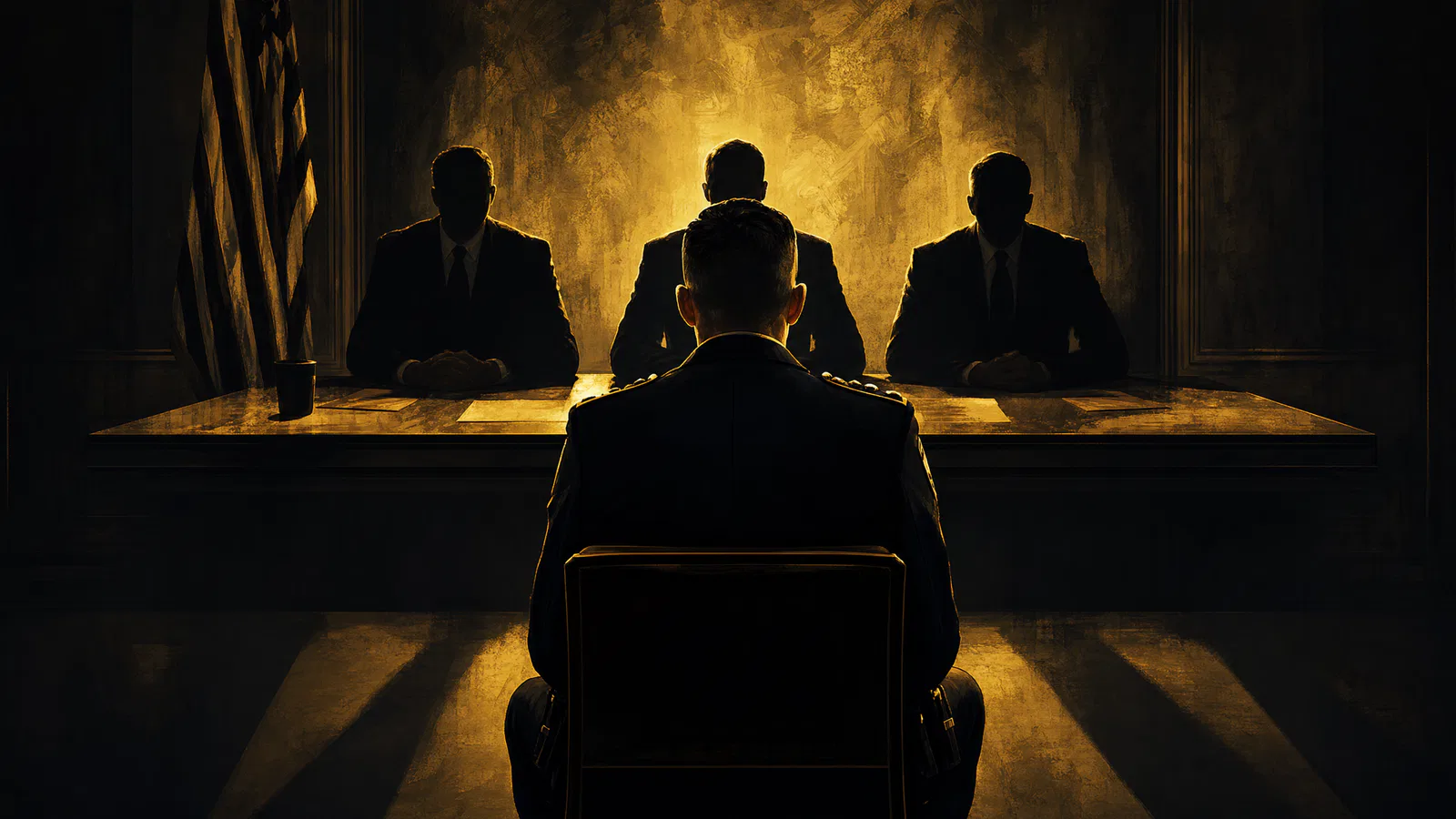
The Perfect Oral Board Opening Statement: A Proven Framework From Someone Who Grades Them
Most candidates overthink this. They memorize a script, rehearse it until it sounds robotic, and then sit down in front of a board and deliver something that sounds like a press release. The board notices. Every time.
Here is what actually works.
Think of it as a timeline
I like to think of the opening statement as a timeline of your life.
That framing changes everything. You are not reciting a prepared speech. You are walking the board through your story in the order it actually happened. Education first, then work experience, then training. That sequence is not arbitrary. Most people finish their education before they start working. So when you follow that order, you are literally just telling your life story from left to right. Street stats alone will not carry you, as explained in the Good Cop Trap.
Why does that matter? Because you lived it. You do not have to memorize a timeline you already know. The order is built in. This is one of the three mistakes that tank oral board scores.
The other thing that framing does is keep you calm. When you start talking about your education, you are in comfortable territory. You know when you graduated, where you went, what you studied. It is easy to talk about. It gets the ball rolling. By the time you get into your work experience, you are already warmed up and the nerves have settled.
The part most candidates get wrong
Here is a real example from a board I sat on.
The position was in a specialized unit. That unit makes fewer than 10 arrests a year. The work is not patrol-style enforcement. It is something else entirely. A candidate came in and spent a significant portion of their opening statement talking about their arrest numbers. They said they made close to 100 arrests per month.
That is a lot of arrests. On patrol, that might be worth mentioning. But this was not a patrol position.
What that answer told the board was that the candidate had not done their homework. They did not understand the mission of the unit they were applying to. You can be a hard worker and still miss the point. And on top of that, 100 arrests per month for a single officer is nearly impossible to sustain. So now the board is doing math in their heads while the candidate is still talking.
Not a good spot to be in.
The lesson is simple. Your opening statement has to be written for the specific position you are testing for. Pull the relevant experience. Leave out what does not apply. If the unit does surveillance work, talk about your surveillance experience. If the position is supervisory, talk about the times you led people. Do not just dump everything you have ever done and hope something sticks.
The order that works
Education. Start here. Where did you go to school, what did you study, any relevant degrees or certifications. Keep it tight. One to two sentences is usually enough unless the education is directly tied to the position.
Experience outside your agency. If you worked in another field, another department, or another jurisdiction before joining your current agency, this is where it goes. Relevant experience is relevant regardless of where it came from.
Experience within your agency. This is usually the bulk of it. Walk through your assignments, your roles, anything that connects to what you are applying for. You do not need to list every unit you have ever worked. Stick to what matters for this position.
Training. End with the relevant courses, certifications, and specialized training you have completed. This is a natural closing point because training is something you accumulate over time. It shows you have been investing in yourself throughout your career. Then finish strong with this 3-part oral board closing statement.
That sequence flows. It makes sense. And because it mirrors the actual order of your career, you are not going to blank on it under pressure.
Close with something that lands
Your opening statement needs a real closing line. Not a trailing sentence that just stops. A line that ties the whole thing together.
Something like: "All of this experience and training has prepared me well for this position, and I look forward to the rest of this board as an opportunity to further demonstrate the work I have put in and why I would be a strong fit."
That is not a script. Adjust the language to sound like you. But the structure is right. You are connecting your background directly to the position, and you are signaling confidence without being arrogant. You are telling the board that you came prepared and that there is more to see.
Boards remember how you start and how you finish. Give them something to hold onto at both ends.
Where AI actually helps here
A lot of candidates practice their opening statement by saying it out loud to themselves in the car. That is better than nothing, but you get no real feedback.
AI tools can change that. Record yourself giving your opening statement, transcribe it, and then run it through a tool like ChatGPT with a prompt like: "I am preparing for an oral board for [specific position]. Here is my opening statement. Does it stay relevant to the position? Does the order flow? What would a board member notice?" You will get specific, immediate feedback. You can iterate on it the same night.
You can also use AI to stress-test your content. Ask it to play the role of a skeptical board member and poke holes in your answer. If your arrest numbers do not make sense, it will tell you. If your experience does not match the position, it will tell you that too.
This is not about having AI write your statement for you. Your story has to be yours. But using it as a practice partner before you sit in front of real people is a smart move.
One more thing
The opening statement is not the whole board. It is the first impression. It sets the tone for everything that follows. A strong opening tells the board you are organized, self-aware, and prepared. A weak one puts you in a hole you spend the rest of the session trying to climb out of.
Get the opening right. Then go win the rest of it.
If you want a complete system for the entire oral board process, the Oral Board Domination Guide covers everything from the opening statement to the closing question. It is available on Kindle for $12.99: Get The Oral Board Domination Guide on Amazon. Candidates who have used it have walked into boards with a level of preparation that shows.
Antonio M. Scott | Lieutenant | PN-1 Nutrition Coach | PN-1 SSR Coach | ACE GFI
STAY ON MISSION
Get the free End-of-Shift Recovery Checklist
Join the list and I'll send you a 2-page checklist to come down from the shift and walk in the door present.