The First 24 Hours After a Hard Call: A No-Pressure Recovery Protocol
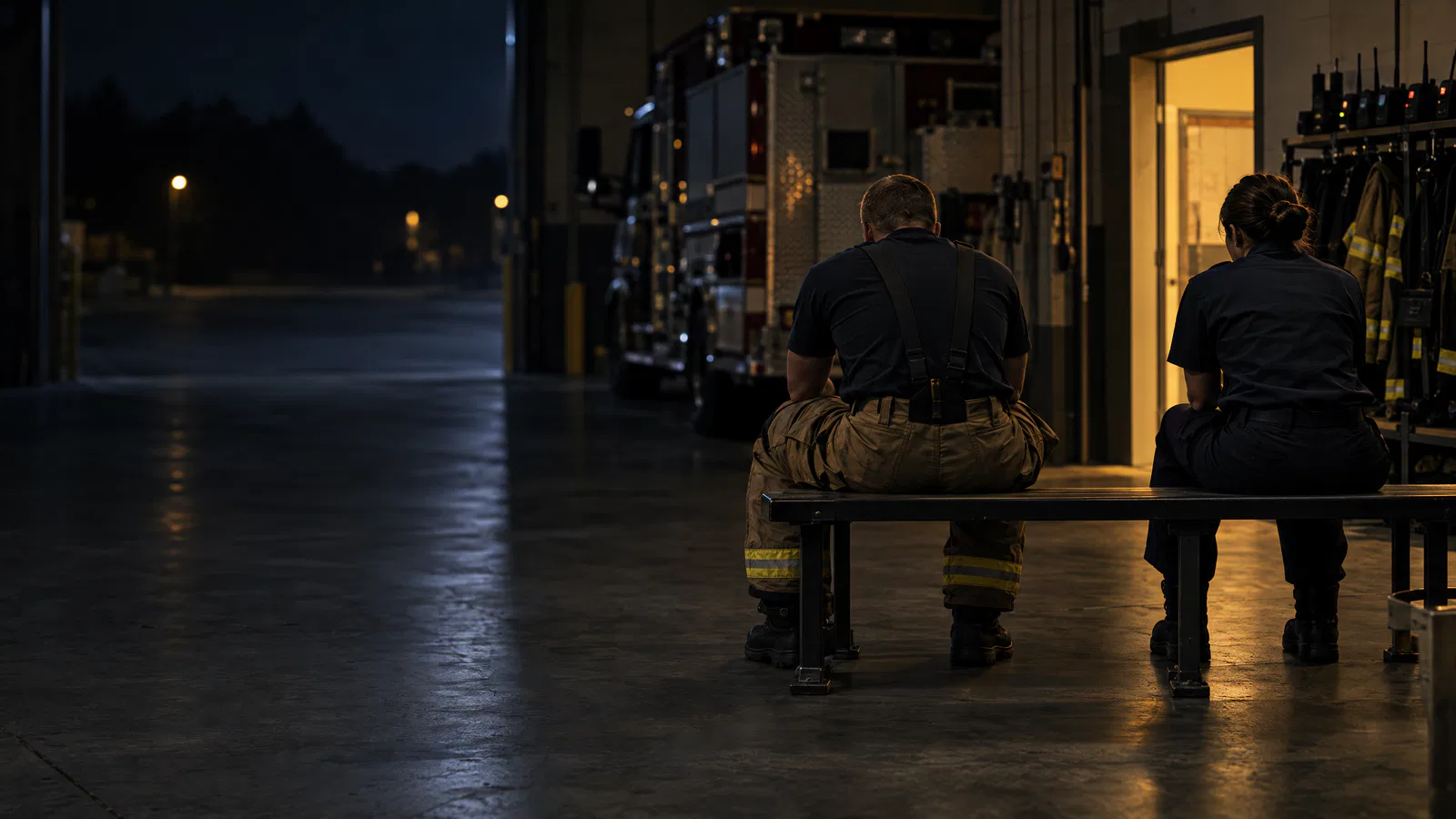
A hard call ends, but the work does not. There is a report to write, equipment to reset, maybe another dispatch waiting. One member of the crew is quiet. Another is moving fast and talking too much. Neither response tells you who is fine.
The first 24 hours are not a test of toughness or a deadline for recovery. Stress reactions can show up at the scene or much later. The job now is simpler: check safety, meet basic needs, give people choices, and make it easy to get help. This is a field routine for law enforcement, fire, and EMS—not a substitute for medical care, agency procedures, or a clinical assessment. [1]
First 15 Minutes: Safety Before Conversation
Clear the scene and follow your agency's command, evidence, exposure, and medical procedures. Then check the crew, starting with what can harm someone now. Ask: Is anyone injured? Can everyone think clearly enough to perform the next task? Who needs relief?
Chest pain, trouble breathing, severe pain, or signs of shock call for immediate medical attention. Confusion or disorientation can also make an active scene unsafe. Do not send a responder who cannot focus back into traffic, an interior operation, patient care, or a solo drive. Tell the supervisor what you can observe and arrange the proper medical or duty-fitness check. Do not try to settle a medical question with a breathing drill. [1]
Once the crew is safe, offer two concrete choices: “Want five minutes out of the noise, or do you need someone to take this task?” Avoid “You good?” It invites a reflex answer. The goal is to find a need you can act on, not to measure how much emotion someone shows.
The Next Hour: Run a Basic Reset
Find a clean, safe place away from the scene if operations allow it. Sit or stand still. Drink water. Eat something if you missed a meal. Take a real break if relief is available. CDC/NIOSH advises responders to pace work, take breaks, eat and sleep regularly, and watch out for exhausted or distracted teammates. None of that is a reward for having a hard time. It is part of keeping people fit for the next decision. [1]
If you feel keyed up and can breathe comfortably, try a short breathing reset: inhale slowly through the nose for a count of three, then exhale slowly for a count of three. Repeat five times. That is the simple relaxation exercise in the VA/National Center for PTSD's Psychological First Aid materials. Treat it as a way to settle enough to decide what comes next, not as a way to prevent PTSD or prove you can return to duty. If you have pain or trouble breathing, get medical help instead. [2]
If you are the supervisor, handle the operational facts separately. Identify who has the scene, who handles notifications, who completes documentation, and who can cover the next call. A factual after-action review may be required. It is not permission to turn roll call into a compulsory account of how each member felt.
Offer a Buddy Check Without Demanding a Story
Use one private, direct check-in: “You don't have to walk me through the call. Are you safe to keep working? Do you want water, relief, a peer-support contact, or a call to someone you trust?” Listen to the answer. If the answer is “not now,” explain how to reach you later and check again when appropriate.
The World Health Organization's psychological first aid guide calls this look, listen, link: check safety and urgent needs, ask and listen without pressure, then connect the person with practical help and support. It specifically says not to pressure people to tell their story. CDC/NIOSH makes the same point for emergency workers: talk when you feel ready, at your own comfort level. [3] [1]
A peer can listen and help with a next step. A peer is not there to diagnose, investigate, or promise a result. Use your agency's trained peer-support or employee-assistance channel when available, and be honest about its privacy rules and limits. SAMHSA describes peer support as listening, practical help, and a connection to other resources; it should not be sold as a guaranteed way to prevent illness. [4]
Do Not Confuse Support With a Forced Debrief
A scene review asks what happened operationally: actions, communications, hazards, and changes for next time. A psychologically focused debrief asks people to recount and process their emotional reactions. They are different jobs. You may need the first. Do not make the second mandatory as a supposed PTSD shield.
A Cochrane review of 15 trials found that a single session of individual psychological debriefing did not prevent PTSD or reduce distress compared with control conditions; study quality varied. NICE says not to offer psychologically focused debriefing to prevent or treat PTSD. That does not mean refusing a voluntary conversation or skipping an operational review. It means a forced emotional retelling is not treatment. [5] [6]
For a commander, the standard is clear: give the crew accurate operational information, a path to relief, and a private route to support. Do not ask everyone to perform their recovery in front of the group.
Protect the First Off-Duty Window
Before leaving, settle the next practical question: Who is covering the call load? Is someone too tired or distressed to drive safely? How will a supervisor or peer contact them later? If a member needs help getting home or to a medical visit, arrange it under agency policy rather than leaving them to improvise.
Off duty, use a plain plan. Eat, get fluids, and make room for sleep. Tell one trusted person what you need without sharing protected incident details: “It was a rough shift. I could use quiet tonight, and I may want to talk later.” Avoid using alcohol or drugs to force sleep or numb the replay. NIMH recommends regular meals, activity, sleep, and contact with supportive people after trauma; CDC/NIOSH advises against overuse of alcohol or drugs. [7] [1]
Do not demand a perfect night. Poor sleep, intrusive thoughts, anger, or feeling flat can happen after a traumatic event. One night does not establish a diagnosis. But silence is not a clearance either. A brief follow-up the next day gives someone another chance to say what has changed. [7]
Know When to Raise the Level of Care
Now: For chest pain, serious breathing trouble, severe pain, signs of shock, or an immediate risk of harm to self or others, get emergency help. If someone is having suicidal thoughts or is in crisis in the United States, call or text 988; call 911 for a life-threatening emergency. Do not leave someone in immediate danger to manage it alone. [1] [7]
Soon: If sleep, concentration, intrusive memories, isolation, substance use, or mood changes are worsening or interfering with duty or home life, contact a qualified health professional, not just a teammate. You do not need to wait a month before asking. NIMH says to seek professional help when symptoms do not improve or begin to interfere with daily life. [7]
Follow through: NICE advises active monitoring for people with subthreshold PTSD symptoms during the first month, with follow-up contact within that month. For adults with acute stress disorder or clinically important PTSD symptoms in that first month, it recommends individual trauma-focused cognitive behavioral therapy. A clinician makes that call; a supervisor's job is to help the person reach care and follow agency fitness-for-duty rules. [6]
The Crew Standard
After the next hard call, run four checks: safe to work, basic needs met, support offered, follow-up named. Write down only what your policy requires. Protect privacy within its actual limits. Keep the operational review factual, and leave emotional disclosure up to the person.
You cannot order someone to recover by tomorrow's lineup. You can give them a safer next hour and a clear route to care.
Go Deeper: Recharge and Recover
The job will take everything you give it. If you work nights, rotating shifts or mandatory overtime, recovery is not optional. It is part of your readiness. Recharge and Recover is my short, practical guide to taking your recovery back on your terms.
Get Recharge and Recover on Kindle ($4.99)
References
STAY ON MISSION
Get the free End-of-Shift Recovery Checklist
Join the list and I'll send you a 2-page checklist to come down from the shift and walk in the door present.