Sleep Deprivation in Policing: The Silent Killer of Performance
The Sobering Numbers Behind the Badge
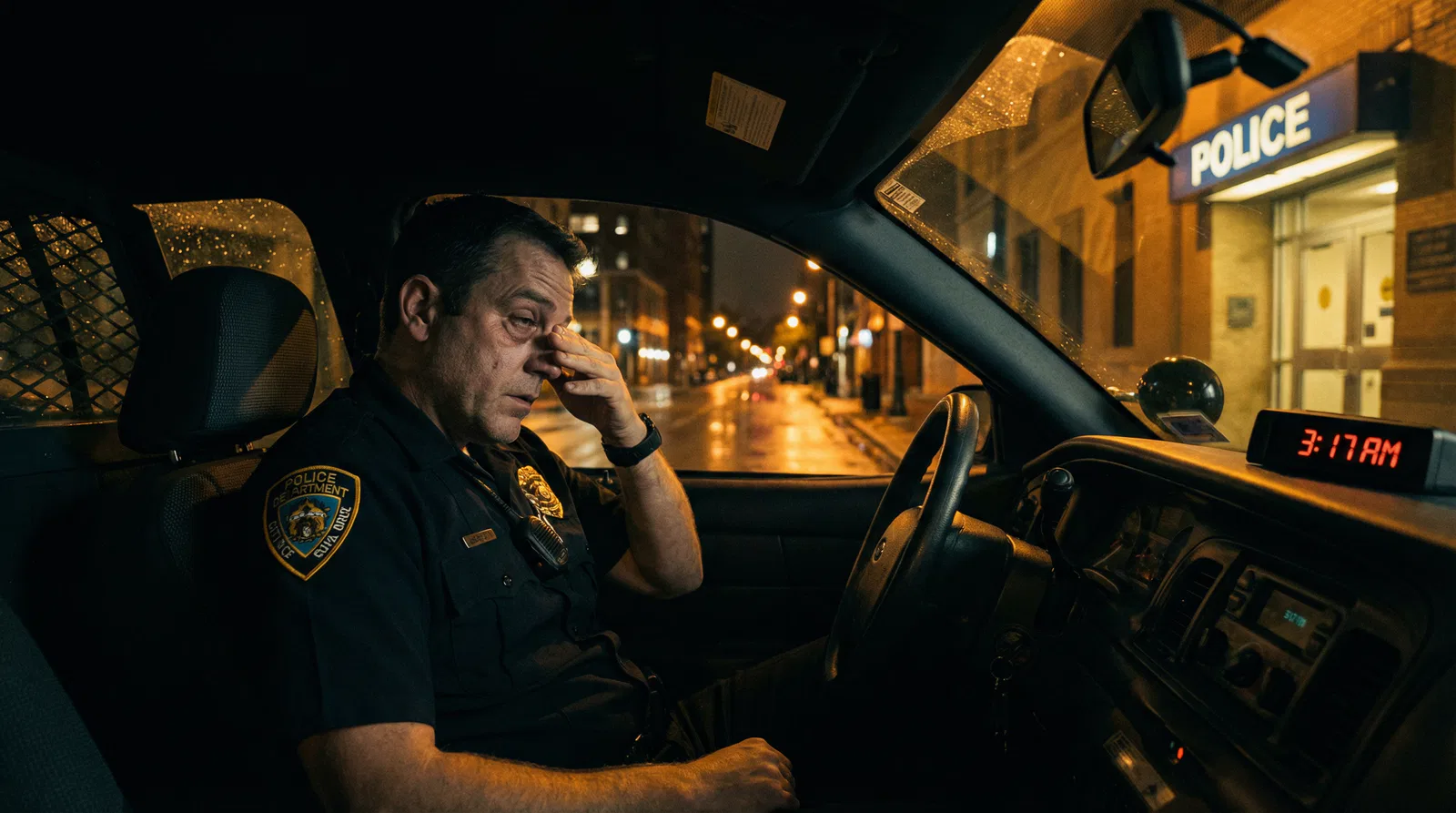
"Code 4, no further at this time." You clear the call, mark yourself in service, and start rolling toward the other side of your beat. It's 0300, the city is finally quiet, and the only thing you hear is the low hum of the engine and the crackle of the radio. Your eyelids feel like they're weighed down with lead. The white lines on the road start to blur. For a split second, you feel your head nod forward before you jerk it back up, heart pounding.
Sound familiar? You're not alone. Far from it. In our line of work, we treat exhaustion like a badge of honor. We brag about running on fumes, surviving on six cups of coffee and sheer force of will. But the data tells a different story. Sleep deprivation isn't a sign of toughness; it's a silent killer of performance, a threat to our careers, and a danger to our lives. And it's time we started treating it like one.
Let's cut right to the chase. This isn't about feeling a little tired. This is about clinical levels of impairment that we would never tolerate in any other context. A landmark study of nearly 5,000 officers conducted by Harvard and Brigham and Women's Hospital revealed some staggering statistics. A full 40% of officers screened positive for a sleep disorder, with obstructive sleep apnea being the most common. That's more than double the rate of the general public.
Think about that. Almost half the people you share a patrol car with, stand shoulder-to-shoulder with on a perimeter, or rely on for backup are likely operating with a significant, undiagnosed medical condition that severely degrades their ability to function.
The numbers get worse. According to the same research, a shocking 46% of officers admitted to falling asleep while driving. Let that sink in. Nearly half of us have found ourselves in a multi-ton vehicle, doing 60 mph, and momentarily lost consciousness. We'd pull someone over for that in a heartbeat, yet we do it ourselves as a matter of routine.
And why is this happening? Because we're not getting enough sleep. The data shows 53% of us average 6.5 hours of sleep or less per night. Our bodies and brains are in a constant state of deficit, and it's having a profound impact on our ability to do the job.
Your Brain on No Sleep
The National Institute of Justice (NIJ) has drawn a direct and terrifying parallel between sleep deprivation and alcohol impairment. Going just 17 hours without sleep is equivalent to having a blood alcohol concentration (BAC) of 0.05%. At that level, your judgment is clouded, your reaction time is slowed, and your ability to track moving objects is diminished. A wearable can track your sleep so you can see the trend.
Push it to 24 hours without sleep, and you're looking at a BAC of 0.10% — legally drunk in every state. Would you go to work after a night of heavy drinking? Of course not. Yet, we routinely pull 16-hour shifts, get a few hours of broken sleep, and come right back to do it all over again, operating at a level of impairment that would get a civilian arrested.
When you're sleep-deprived, your prefrontal cortex — the part of your brain responsible for judgment, impulse control, and complex decision-making — essentially goes offline. You're more likely to make mistakes, to use inappropriate force, and to have difficulty de-escalating volatile situations. You're a danger to yourself, your partners, and the community you serve. Night shift workers can add the 3 AM crash protocol.
Taking Back Control of Your Rack Time
So, what's the solution? We can't change the nature of the job. The 12-hour shifts, the rotating schedules, and the middle-of-the-night call-outs aren't going away. But we can change how we approach our recovery. It's not about being "soft"; it's about being strategic. It's about treating sleep as a critical piece of operational equipment.
Here are a few practical strategies you can implement immediately:
1. Blackout Your Bedroom. Your body is designed to sleep in the dark. When you're working nights and sleeping during the day, you need to replicate that environment. Invest in blackout curtains, wear a sleep mask, and eliminate every source of light in your bedroom. Your body will thank you for it.
2. Kill the Electronics. The blue light emitted by your phone, tablet, and TV suppresses the production of melatonin, the hormone that tells your body it's time to sleep. Make it a rule to turn off all screens at least an hour before you plan to go to bed. Read a book instead.
3. Watch Your Caffeine Intake. This one is tough, I know. Coffee is the lifeblood of law enforcement. But caffeine has a half-life of about 5-6 hours. That means if you have a cup of coffee at 1900, half of that caffeine is still in your system when you're trying to go to sleep at midnight. Try to avoid caffeine in the second half of your shift.
4. Create a Pre-Sleep Routine. Just like you have a routine for getting ready for work, you need one for getting ready for bed. It could be as simple as taking a hot shower, doing some light stretching, or practicing a few minutes of deep breathing. The goal is to send a signal to your body that it's time to power down.
A Wake-Up Call for Agencies
Ultimately, this is an issue that agencies need to take seriously. The culture of "sucking it up" is literally killing us. We need policies that promote healthy sleep habits, access to screening and treatment for sleep disorders, and scheduling that takes into account the realities of human physiology. The cost of doing nothing — in terms of sick leave, vehicle accidents, and on-the-job injuries — is far too high to ignore.
This isn't just about wellness; it's about operational readiness. A well-rested officer is a more effective officer. It's that simple.
Go Deeper: Recharge and Recover
The job will take everything you give it. If you work nights, rotating shifts or mandatory overtime, recovery is not optional. It is part of your readiness. Recharge and Recover is my short, practical guide to taking your recovery back on your terms.
Get Recharge and Recover on Kindle
Antonio M. Scott is the founder of Optimum Valor, a performance optimization system built for law enforcement officers, firefighters, EMS professionals, and public safety leaders.
Support the Mission
Optimum Valor provides these performance protocols, leadership frameworks, and training systems for free because the professionals who protect and serve deserve access to elite resources.
If this content has helped you improve your recovery, your leadership, or your performance on the street, consider supporting the platform. Your contribution directly funds the creation of more tools and resources for first responders.
STAY ON MISSION
Get the free End-of-Shift Recovery Checklist
Join the list and I'll send you a 2-page checklist to come down from the shift and walk in the door present.